Why won't MPs tax the rich? We asked them – and their answers gave us hope | Faiza Shaheen
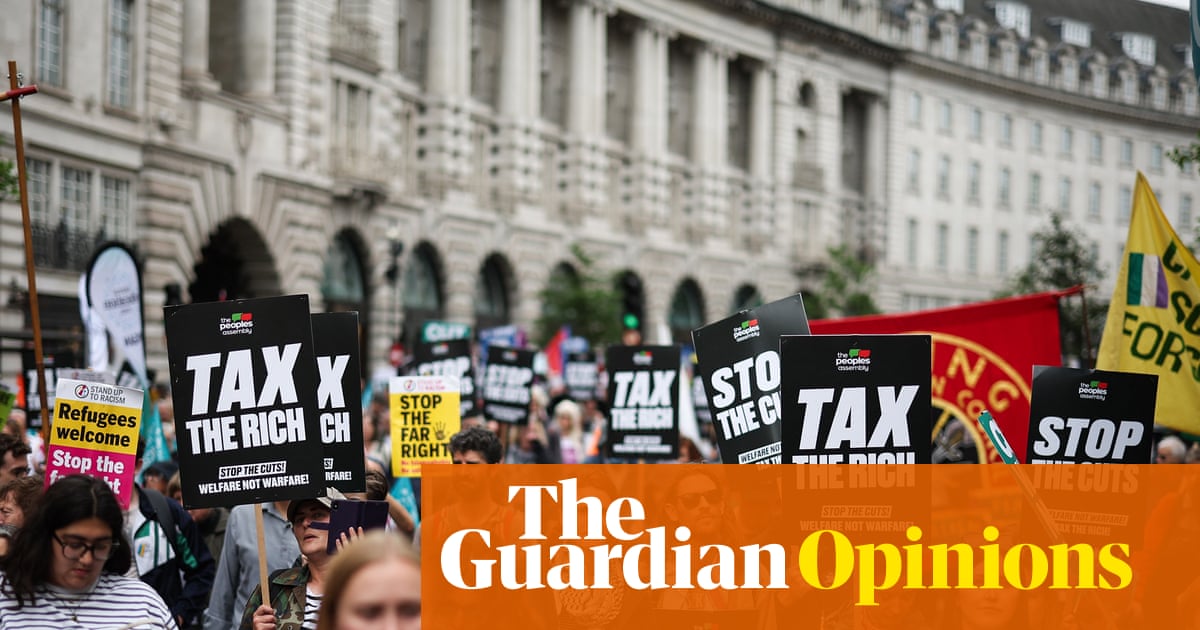
Even most Reform voters are in favour of a tax on the super-wealthy. Yet the first budget of the Burnham era looks set to dodge the issue
In John Healey’s first budget this week, we will finally get a sense of the economic policies that will deliver Andy Burnham’s pledge to end neoliberalism. Or will we? Capital gains tax equalised with income tax? Ruled out. A genuine wealth tax on those sitting on over £10m? Off the table. Even the briefed increase in the banking surcharge only takes us back to where it was until the Conservatives cut it in 2023. We can cross our fingers for trailed policies on supporting high streets, financial devolution and longer-term investment, but there is still more than a whiff of trickle-down economics in the air.
Poll after poll shows that the British public overwhelmingly supports wealth taxes on the super-rich – including three in five Reform-leaning voters. We know that wealth inequality – with the richest 50 families in the UK possessing more wealth than half of the UK population – is weakening our economy, eroding our social fabric and undermining our democracy. Just last year, Burnham, then mayor of Greater Manchester, explicitly acknowledged that we have “overtaxed labour and undertaxed wealth”. So what on earth is going on?
To solve this paradox, our team at Tax Justice UK joined forces with researchers at the University of Strathclyde to go straight to the source. We interviewed 30 politicians across Westminster, Holyrood and the Senedd between February and July 2026, while Keir Starmer was prime minister. We made sure, in particular, that we spoke to every faction of the Labour party in Westminster – as the party in government and the party we would expect to be predisposed to higher taxes on the super-rich, its opinions inevitably garner more interest. The findings offer a rare glimpse into the hidden machinery of British politics. They suggest that the barrier to taxing extreme wealth is a deeply entrenched pattern of political fear, economic uncertainty, institutional capture and parliamentary self-preservation.
Kutipan awal dari The Guardian Business, ditulis oleh Faiza Shaheen. Hak cipta artikel milik penerbit.